How to Fix Copyright
William Patry

Patry is senior copyright counsel at Google, and despite the upfront disclaimer, this book defines a vision of copyright that clearly benefits the world’s biggest search engine.
Patry is senior copyright counsel at Google, and despite the upfront disclaimer, this book defines a vision of copyright that clearly benefits the world’s biggest search engine.

A smart study of books’ physical form, and a defense of its value independent of the words on the page.

As a novel, The Lifecycle of Software Objects suffers from expository writing, flat characters, and uninspired prose. But as a thought experiment, it’s surprisingly (if incompletely) compelling.

A precursor to Alexander’s A Pattern Language, in which he and Chermayeff define what’s wrong with the design of the suburbs, and outline the principles behind a more human (and urban) environment.
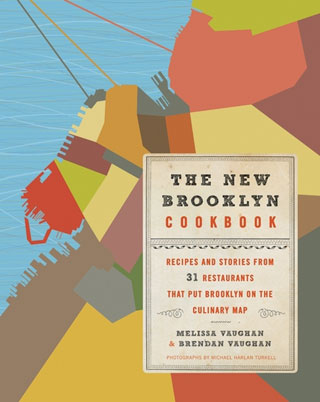
I use this less as a cookbook than as a guide for where to eat; but the recipes and photography are as lovely as the neighborhoods.

A minimalist’s manifesto, with simple recipes and beautiful, spare photography. Keeping it on my coffee table for perusing before heading to the farmer’s market.

I’m only just now reading this book, but it was a bit like discovering an old friend you didn’t know you had. Zinsser’s is the kind of casual, unassuming writing that sounds effortless, but isn’t.

The sixth book from A Book Apart features data-driven techniques and best practices for designing for mobile from the inimitable Luke Wroblewski. It also represents the best kind of short book: packed with information and a delightful read.

Aarron Walter joins the A Book Apart rainbow of knowledge with this short book on designing for humans. A mix of psychology and case studies show how designing for emotion works, with guidance on the small or large steps you can take to start doing it.

Terkel interviewed people of all walks of life (though mostly the working kind) about what they do and how they feel about it. The result is a massive collection of failed dreams, despair, hope, and pride.

A collection of short reflections on the future of reading, including those from Ellen Lupton, James Bridle, Erik Spiekermann, and N. Katharine Hayles.

Trickster shows how our most playful, devious stories are also (perhaps not surprisingly) our most revealing.

Glieck’s loosely organized tome details the many ways we’ve organized and communicated information over the ages; or, as is more often the case, failed to do so.

An essay turned pamphlet, short enough to reread regularly. Drucker’s advice comes down to knowing yourself well enough to make the right decisions.

A dense novel, concerning a small group of American ex-patriots and a series of cult murders. Strange and beautiful.

Marcotte’s methods are smart, and his storytelling and guidance even smarter.

Kelly’s analysis of technology’s needs vis-à-vis our own is an insightful approach to making choices about technology in our own lives, now and into the future.

Alex Wright shows the many ways we have endeavored to manage an abundance of information, beginning with libraries and encyclopedias, running through taxonomies and folksonomies, and into networks which both eschew formal organization and evolve governing structures as they mature.

The third title from A Book Apart, and the one closest to my heart. Kissane explores the roots of content strategy, as well as the methodologies behind the work.

Fish argues that the building blocks of writing are sentences, and that if you want to write a good one, you first have to learn how to read it.