A Week at the Airport
Alain de Botton

A slim document observing the place most of us strive to avoid; a good lazy travel book.
A slim document observing the place most of us strive to avoid; a good lazy travel book.

U&lc was a magazine of experimental typography, founded by Herb Lubalin in 1973, and published through 1999. John D. Berry’s tome includes reproductions of many of the original issues, plus notes on the history of the magazine from Berry and others.

Bringhurst’s short essay meanders through the history of scripts and their varied forms, touching on the origins of their physical shapes as well as the political and social forces that impacted them along the way.

Short, almost journal-like essays on our relationship to (and against) time.
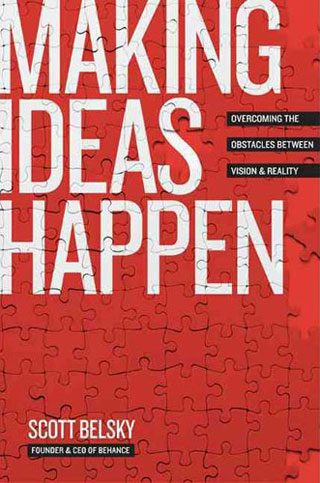
Reductively, this is GTD for the Photoshop set. But Belsky defines creativity expansively, as something that people of all vocations are not only capable of, but naturally inclined to.

Almost certainly the greatest novel ever written, and an early precursor to postmodernism.

An academic treatise that argues that rather than reading books, we should be mining them for data.

A series of essays from the author of A History of Reading that explores the reader’s perspective.

A reproduction of Bodoni’s lifelong project to document as many typefaces as possible, complete with the dedication by his widow, and an essay from Stephan Füssel placing the book in historical context.

A collection of architectural patterns, fascinating for their grasp and depiction of the social experience of a town.

Hyde addresses the history of copyright, and demonstrates that the founding fathers were not at all fans of it.

The second book from A Book Apart, and required reading for anyone who wants to make the web a more beautiful place.

Lovingly illustrated and printed, this is your guide to all the hidden art galleries in Tokyo, complete with notes on where to eat and what neighborhoods to get lost in on your way.

The original subtitle of this book defined it as “Imagination and the Erotic Life of Property,” which hints at the real message better than the revision: that real art, no matter the price, is always a gift from the artist to the audience.

“The editor, not the author, best understands the readership,” Plotnik says. “Authors know their subject. Editors specialize in knowing the audience.”

Personal musings on the life of the writer. Lamott is primarily a novelist, but I find her writing advice to be just as relevant to nonfiction.

In this follow-up to Here Comes Everybody, Shirky argues that we’re evolving from passive consumers of Seinfeld to creative makers of everything from lolcats to open source software to real-time news reporting.
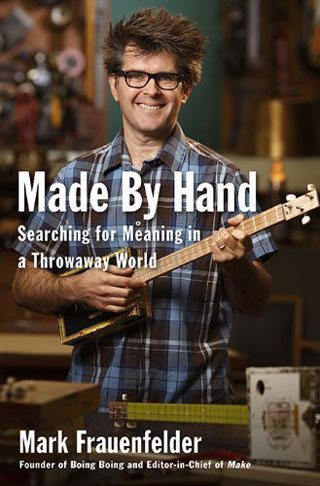
A chronicle of one man’s attempt to become a DIYer. Frauenfelder learns that making things yourself means mostly making mistakes, but those mistakes can be a source of joy.

Infuriatingly good. There isn’t another writer alive who could take the obscurities of subprime mortgages and credit default swaps and deliver a page-turner like this one.

An engineer’s perspective on the design process. His conclusions are familiar, but the means by which he gets there are fascinating.