The Pleasures and Sorrows of Work
Alain de Botton

A lengthy and wonderful photo essay with stories of various kinds of work, from biscuit manufacturer to rocket scientist.
A lengthy and wonderful photo essay with stories of various kinds of work, from biscuit manufacturer to rocket scientist.

A wide-ranging and philosophical approach to user-centered design.

The inaugural book from A Book Apart, the new publisher for which I am co-founder and editor.

The book I most dreaded carrying around when I was a student (because of its heft), but which I now profess the most nostalgia for.

A collection of essays written between 1949 and 1974, the year of Tschichold’s death.

Lanier’s manifesto brings attention to the many ways in which human behavior is being mechanized by technology.

Proust’s meditations on reading, and the gifts that writers leave their readers. Best read slowly.

This little book from everyone’s favorite omnivore deftly defines a series of simple rules to eat by, expanding on his mantra from In Defense of Food: eat food, not too much, mostly plants.

Raj Patel argues that the tragedy of the commons is one borne of privatization and corporatism, not an innate fact of the commoners themselves.

Lahey’s simple method for bread making (which trades kneading for time) is worth the hype.

de Zengotita investigates the ways in which our experience of the world is mediated through traditional media (television, newspapers) as well as the ways in which we self-mediate.

The book companion to Errol Morris’ movie of the same name. Where Morris tells the story with video and photography, Gourevitch communicates with words alone.

Battles’ lively history runs from the ancients to the internet, with tales of libraries built and burned along the way.

With Coetzee’s last few works of fiction, he seems to be making an effort to get out ahead of the biographers who will no doubt pounce on his grave while still warm.

Manguel—author of A History of Reading—turns his eye to how we “read” art. A welcome correlative to Berger’s Ways of Seeing.

Sennett defines craftmanship as the desire to do a job well for its own sake. In so doing, he frees it of the bounds of carpentry or metalwork and extends the work of craft to that of the programmer, the doctor, and the parent.

Based on the BBC documentary, Berger begins with a retelling of Walter Benjamin’s Art in the Age of Mechanical Reproduction and concludes with a brilliant analysis of modern day advertising and its roots in Renaissance-era oil painting.
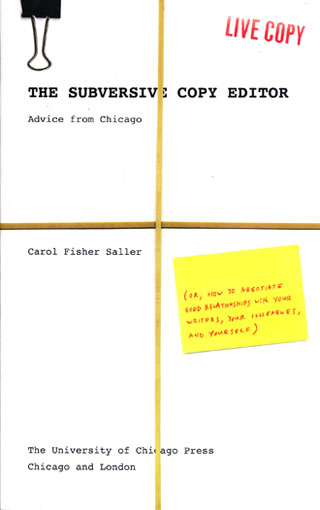
Carol Fisher Saller’s irreverent guide to copy editing has helpful advice for working with writers, as well as guidance for writers about working with their editor.

A beautifully designed book that has served me well in the kitchen.

Bill McKibben indicts the current economic system for it’s single-minded pursuit of “more” without regard for whether or not it is (or can be) “better.”